A toothbrush cleans the outer, inner and chewing surfaces of your teeth well, but its bristles struggle to reach the narrow gaps where neighbouring teeth touch. Plaque and food left in those spaces can irritate the gums and contribute to decay. Cleaning between your teeth every day is widely recommended for that reason, and dental floss is one of the most common ways to do it.
Many people floss but rush it, or snap the floss down onto the gum and pull it straight back out. A careful technique is gentler and more effective.
What you need
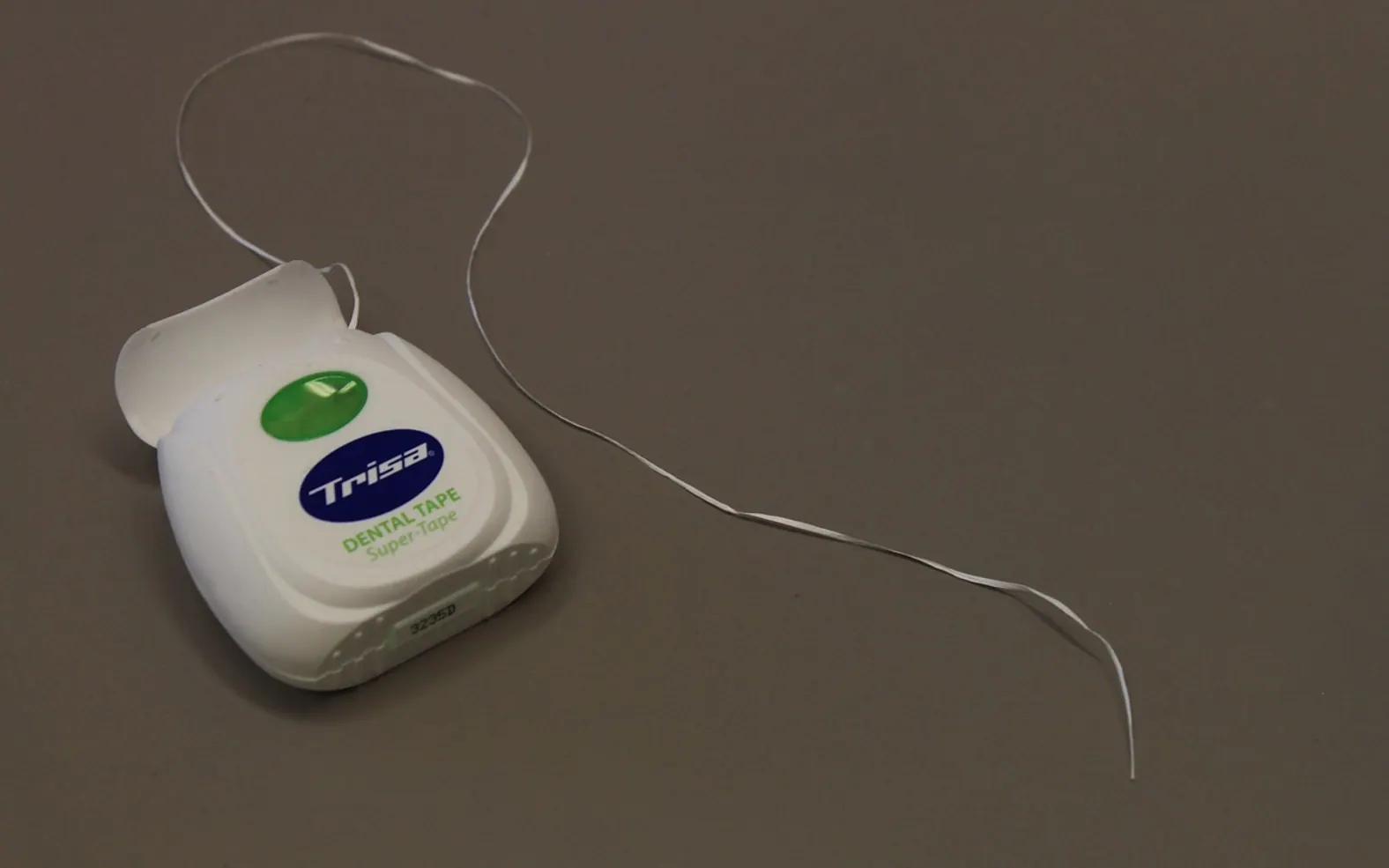
Any standard dental floss will do. Waxed floss slides more easily between tight teeth, while unwaxed floss is thinner and some people prefer its feel. Dental tape is wider and flatter, which can be more comfortable if your teeth have larger gaps. The best floss is the one you will actually use.
Step-by-step technique
- Take a generous length. Pull out roughly an arm's length of floss. Using a long piece means you can move to a clean section for each gap.
- Wind it around your fingers. Wrap most of the floss around the middle finger of one hand and a little around the middle finger of the other. The second finger will take up used floss as you go.
- Grip a short section. Hold a few centimetres of floss tightly between your thumbs and index fingers. A short working length gives you better control.
- Ease it between the teeth. Guide the floss into the gap with a gentle back-and-forth sawing motion. Do not force or snap it down, as this can cut the gum.
- Curve it into a C-shape. When the floss reaches the gumline, wrap it around the side of one tooth so it hugs the surface in a C shape.
- Slide up and down. Gently move the floss up and down along the side of the tooth, going slightly under the gumline where it feels comfortable. Then curve it around the neighbouring tooth and repeat.
- Move to a fresh section. Unwind clean floss from one finger and take up the used part on the other before moving to the next gap.
- Do not forget the back teeth. Clean behind the last molar on each side, top and bottom. These surfaces are easy to miss.
When you have finished, rinse your mouth with water to clear away anything you have dislodged.
How often and when
Once a day is the usual advice. Some people prefer to floss in the evening so their teeth are clean before the longest stretch without eating; others find mornings easier to stick to. Whether you floss before or after brushing matters less than doing it consistently and thoroughly.
Common mistakes
- Snapping the floss onto the gum, which can cause soreness and small cuts.
- Using the same section for every gap, which moves plaque around rather than removing it.
- Only cleaning the front teeth because they are easier to reach.
- Rushing. Taking a couple of unhurried minutes is usually enough to cover every gap.
- Stopping when gums bleed. See the next section.
Bleeding gums when you start
If you are new to flossing or have not done it in a while, your gums may bleed a little at first. This often settles over a week or two of gentle, regular cleaning as the gums become healthier. However, bleeding that continues, gums that are swollen, painful or receding, or persistent bad breath are worth showing to a dentist or dental hygienist, as they can be signs of gum disease that needs professional care.
Alternatives to string floss
Floss is not the only option. If it is difficult to use, for example because of limited hand movement, wide gaps or dental work, other tools can clean between the teeth:
| Tool | Can suit | Things to know |
|---|---|---|
| Interdental brushes | Larger gaps, braces, bridges | Come in several sizes; a dental professional can help you choose |
| Floss picks | People who find winding floss awkward | Easy to hold, but use a fresh pick or rinse it between areas |
| Water flossers | Braces, implants, limited dexterity | Use a steady jet along the gumline; ask whether it should replace or add to other cleaning |
| Floss threaders | Fixed bridges and braces | Help guide floss under wires or connected teeth |
Cleaning around dental work
Crowns, bridges, braces and implants all need careful cleaning, but the right method varies. With dental implants, keeping the gum around the implant healthy is an important part of looking after it, so ask your dentist or hygienist which floss or brush they suggest and to show you how to use it.
Make it a routine
Linking flossing to something you already do every day, such as brushing your teeth before bed, makes it easier to keep up. Leaving the floss next to your toothbrush, rather than in a drawer, is a small reminder that helps. At your next check-up, you can ask the dental team to watch your technique and suggest improvements. If you are unsure how often to book those visits, our article on how often you should see a dentist explains how that is usually decided.