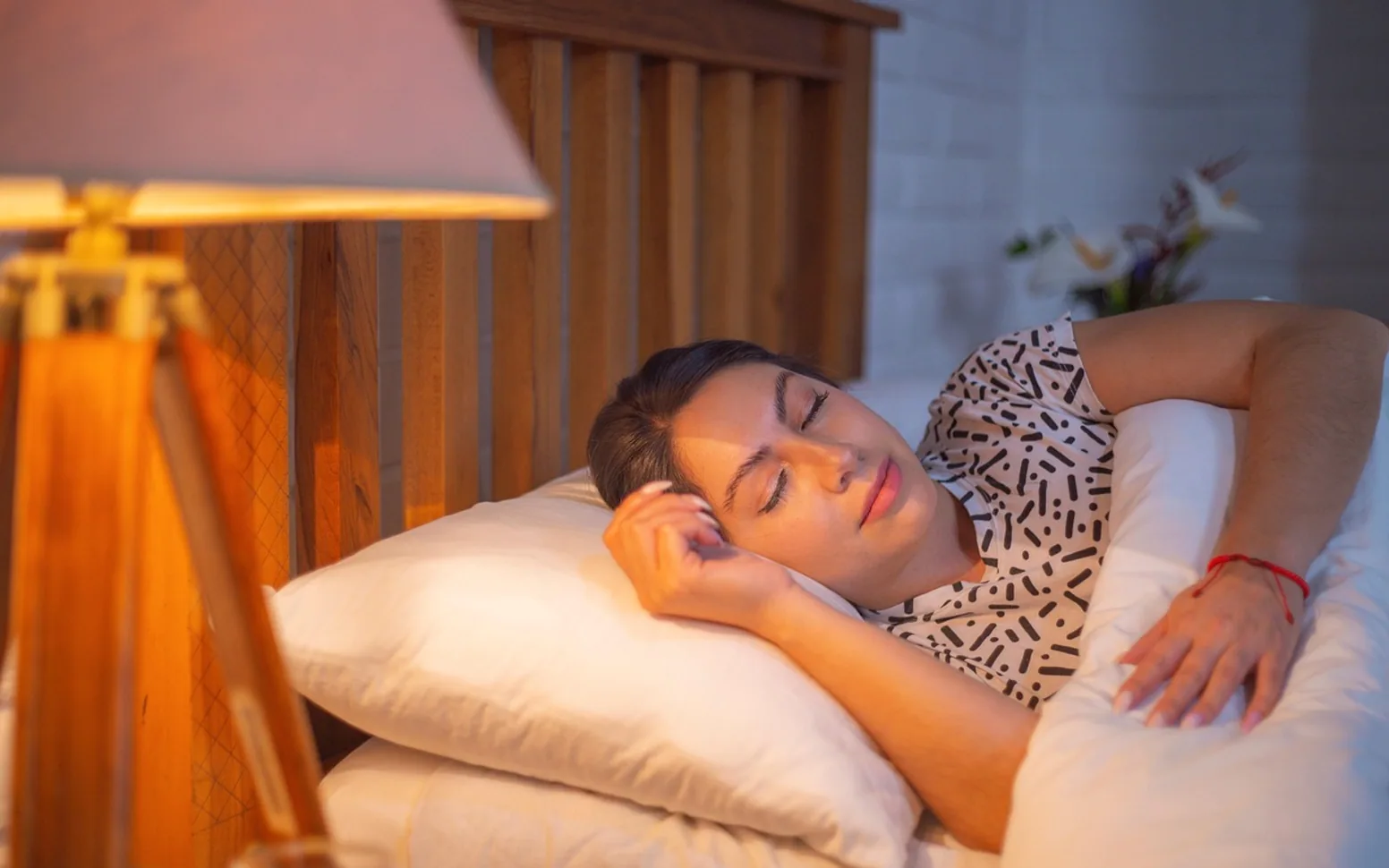
Most of the time, getting too hot in bed comes down to the sleeping environment: a warm room, heavy bedding, synthetic sleepwear or a partner who radiates heat. Evening habits such as alcohol, spicy food or late exercise can add to it. Less often, overheating at night is linked to hormones, infections, medicines or other health conditions, and regular drenching night sweats should be checked by a doctor.
Why temperature matters for sleep
Body temperature follows a daily rhythm. In the evening it starts to fall, and that drop is one of the signals that helps us drift off and stay asleep. When the bedroom is warm or the bedding traps heat, the body struggles to cool down, and sleep tends to become lighter and more broken. You may wake up kicking off the covers, feel restless or find the pillow damp. Over time, overheating can chip away at the deeper stages of sleep covered in how to get more deep sleep.
Everyday causes
- A warm bedroom. Heating left on, poor ventilation or a room that catches the afternoon sun.
- Bedding and mattress. Thick duvets, memory foam and synthetic fabrics can hold heat close to the body.
- Sleepwear. Heavy or non-breathable fabrics stop sweat evaporating.
- Sharing the bed. Another person, or a pet, adds a surprising amount of warmth.
- Alcohol. It widens blood vessels near the skin and can leave you feeling hot and sweaty in the night.
- Late meals and spicy food. Digestion produces some heat, and spicy dishes can trigger sweating.
- Exercise close to bedtime. Body temperature can stay raised for a while after a hard workout.
- Stress and anxiety. An alert nervous system can bring on sweating and a fast heartbeat at night.
Health-related causes worth knowing about
Sometimes feeling hot at night has a medical explanation. These are possibilities to discuss with a professional, not to diagnose at home:
| Possible cause | What may go with it |
|---|---|
| Hormonal changes such as perimenopause and menopause | Hot flushes during the day, changes in periods |
| Infections | Fever, chills, feeling generally unwell |
| Medicines | Some antidepressants, hormone treatments and fever-reducing drugs can cause sweating |
| An overactive thyroid | Weight loss, a fast heartbeat, feeling hot all the time |
| Low blood sugar at night | Mainly in people with diabetes who use certain treatments |
| Sleep apnoea | Loud snoring, gasping, daytime sleepiness |
Do not stop a prescribed medicine because of night sweats; ask the prescriber or a pharmacist whether it could be the cause. Keeping a short note of when the sweating happens, how often and what else you noticed will make that conversation more useful.
How to sleep cooler
- Cool the room before bed. Open a window, close curtains during the hottest part of the day and turn the heating down in the bedroom.
- Move the air. A fan helps sweat evaporate, even when it does not lower the room temperature much.
- Layer the bed. Use a lighter duvet with a blanket you can push off, rather than one thick layer.
- Pick breathable fabrics. Cotton or linen sheets and loose sleepwear let heat escape.
- Take a warm, not hot, shower in the evening. It may seem odd, but a warm shower can help the body shed heat afterwards.
- Have water within reach at night. Sweating at night is easier to manage when you are well hydrated.
- Adjust evening habits. Try having less alcohol, an earlier dinner and workouts finished well before bedtime.
- Use separate covers. If you share a bed, two lighter duvets let each person set their own comfort level.
How to stop night sweats
True night sweats are more than feeling a bit warm. They soak sleepwear or sheets even when the room is cool. The best way to reduce them depends on the cause, which is why they deserve a check-up rather than guesswork. Keeping the room cool, wearing light layers and having a change of sleepwear nearby can make nights more comfortable in the meantime. If waking at night has become a pattern for other reasons too, the guide on why you keep waking up at night may help you spot what else is going on.
When to see a doctor
Book an appointment if you have night sweats regularly, especially with fever, unexplained weight loss, a persistent cough, swollen glands or pain. The same applies if hot nights started after a new medicine, or if you feel unwell during the day. Our guide on deciding when to go to the doctor explains which symptoms usually justify an appointment. Most causes of feeling hot at night are harmless and fixable, but it is reassuring to rule out the ones that are not.